Full-space Coupled Purification Technology, Accelerate Formaldehyde Volatilization in New Homes

Natur-o
German TUV Certificate, No. TR-06727-53394-01

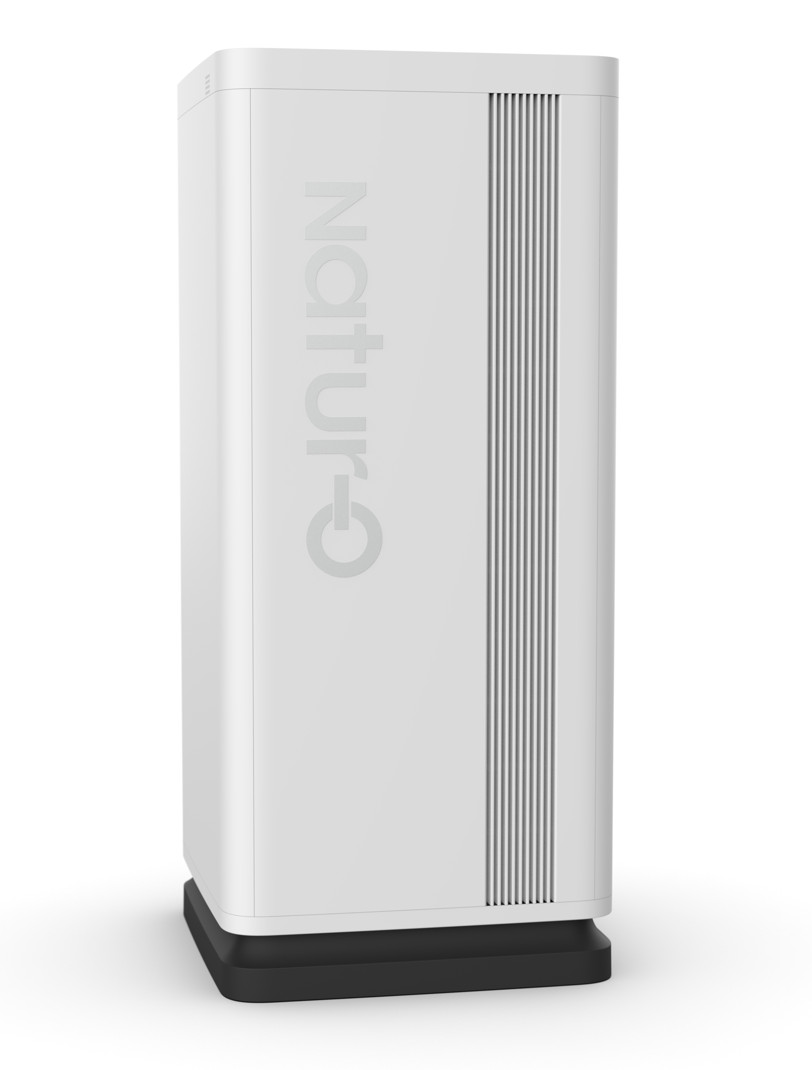
Natur-O F Series
Formaldehyde Removal Purifier

Hospital & Laboratory Grade Formaldehyde Purifier

Harmful volatile substances such as formaldehyde and xylene require treatment not only in hospital pathology laboratories, but also constitute major indoor pollutants in newly renovated homes. With a volatilization cycle of several years, they continuously impair human health.
For instance, with air exchanged once per hour at room temperature, formaldehyde emission drops by 50% within three months. Nevertheless, it will continue to volatilize at a rate of 0.06 to 0.13 mg/m² per hour for the subsequent one to three years.[1][2]

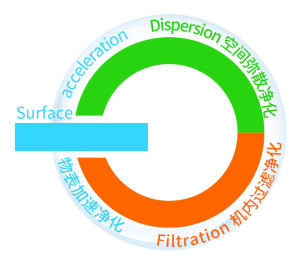
FreshAir applies the full-space coupled purification technology proven effective in hundreds of pathology laboratories. Leveraging the long half-life and high electron energy of Natur-O small ion clusters, this technology integrates three purification effects: internal filtration, space diffusion purification and accelerated surface purification. The Natur-O F Series Formaldehyde Removal Purifier is specially designed for rapid formaldehyde removal in newly renovated residences.


Natur-O Full-space Coupled Purification Technology

Combining the long half-life and high electron energy of Natur-O small ion clusters with Fick's Second Law, this technology integrates internal filtration, space diffusion purification and accelerated surface purification. It accelerates the volatilization of harmful substances from indoor building materials and soft furnishings for rapid formaldehyde removal.

 

Internal Filtration & Purification of Natur-O
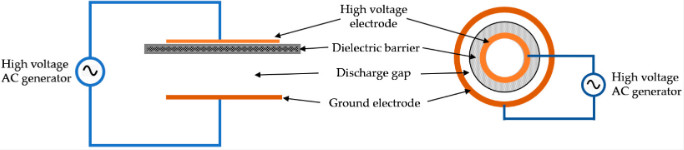
The purifier draws in polluted indoor air. As the air passes through the DBD main discharge zone, high-density low-temperature plasma triggers oxidation reactions with formaldehyde and other target gases to decompose formaldehyde rapidly.[3][4]
Partial target gases treatable by Natur-O:p-Xylene (C8H10),Cyclohexene (C6H10 ),Pinene(C8H18),Acetone (C3H6O),Hydrogen Sulfide (H2S) ,Formaldehyde(C2H6O),Ethylene (C2H4),Butane(C4H10) ,Methanol (CH4O),Formaldehyde ( CH2O),Ozone(O3)。
For other VOCs present in indoor environments, please contact us.

Schematic Diagram of Dielectric Barrier Discharge (DBD)

Spatial Diffusion Purification and Surface Accelerated Purification of Natur-O
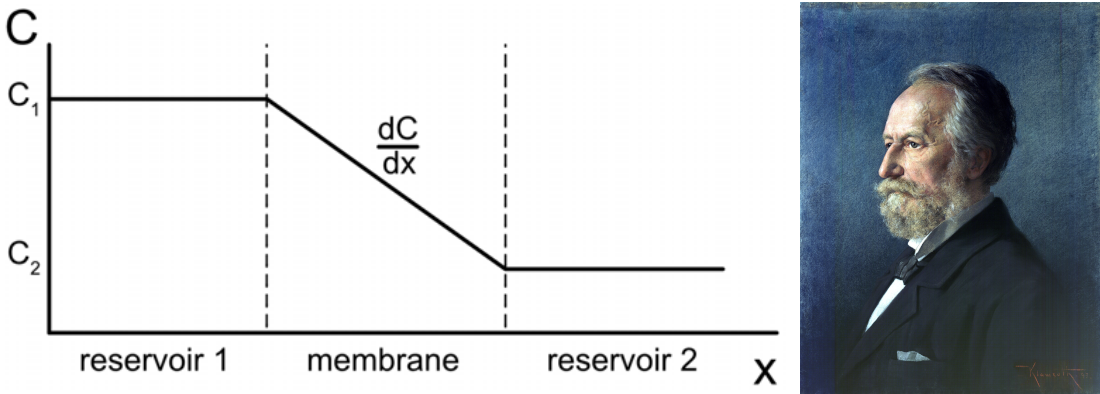
Beyond internal filtration and purification, Natur-O releases long-lived small ion clusters that spread throughout the room via Brownian motion. Remaining airborne for several minutes, the clusters actively neutralize pollutants. Some settle onto building material surfaces, raise the dC value and accelerate formaldehyde volatilization. Fick's Second Law J=-D*dC/dX
Take formaldehyde volatilization as an example:
J: Volatilization rate of formaldehyde in building materials
D: The diffusion coefficient (D) of decorative materials varies due to differences in their diffusion coefficients, surface density and internal structures.
dC:Concentration difference of formaldehyde between building materials and ambient air near surfaces
dX:Surface layer thickness of building materials

Fick and Fick's second law

The surface accelerated purification of Natur-O raises the dC value by promptly removing formaldehyde from the air adjacent to material surfaces. In accordance with Fick's Second Law, this increases J and speeds up formaldehyde volatilization.


Professional formaldehyde source tracing and testing services

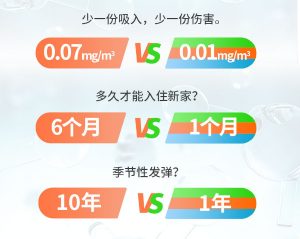
Combined with professional formaldehyde source tracing and testing services, Natur-O F helps formaldehyde levels drop below national standard limits within one month after renovation for safe occupancy. It also cuts the VOC volatilization cycle of furniture and soft furnishings from 10 years to less than one year.

Refrences
[1]Chamber assessment of formaldehyde and VOC emissions from wood-based panels
Abstract: The research team measured volatile organic compound emissions from particleboard, medium-density fiberboard (MDF) and office furniture in a dynamically simulated small room environment. Their formaldehyde emission factors were approximately twice the European low-emission standard, and failed to drop to the standard level within several months. The team concluded that long-term emission performance cannot be predicted by short-term measurements.
Indoor Air. 1999 Sep;9(3):209-15DOI: 10.1111/j.1600-0668.1999.t01-1-00008.x

[2]Hygienic aspects of the use of pressed-wood products in residential buildings. Part I. The effect of particleboards ageing on release of formaldehyde

Particleboards bonded with urea-formaldehyde resin (100 × 40 mm panels) sourced from different manufacturers were stored at room temperature under ventilated conditions. At selected time intervals, the panels were placed in a climate chamber for five days with an air exchange rate of once per hour, temperature of 25°C and relative humidity (RH) of 45%, to test formaldehyde (CH₂O) emissions.
Formaldehyde emissions dropped by more than 50% within the first three months, followed by a slight decline in the subsequent months. Over the next one to three years, formaldehyde emissions remained steady at 0.06–0.13 mg/m²/h regardless of initial release levels.

Bull Inst Marit Trop Med Gdynia 1990;41(1-4):73-8.PMID: 2135930

[3]Destruction of Formaldehyde with Dielectric Barrier Discharge Plasmas
DOI: 10.1021/es00001a023
© American Chemical Society

[4]Feasibility of destruction of gaseous benzene with dielectric barrier discharge
DOI: 10.1016/j.jhazmat.2007.12.048
© J Hazard Mater

TOP