
检验科的气溶胶风险,现在是时候来解决了!

中控塔 中枢质控柱
Do you have any questions about the basic design requirements and subsequent maintenance of medical laboratories? We offer professional technical services in compliance with relevant medical laboratory construction standards. Our seasoned engineers are ready to provide dedicated assistance. Feel free to consult our experts now!

Let's design the clinical laboratory of the future together.
Do you have questions about the basic design requirements and ongoing maintenance for hematology departments? Our experienced engineers are ready to offer professional assistance. Consult our experts today!

Let's design the hematology department of the future together.

ClabAir — Clinical Laboratory Air Quality Control System ClabAir is the ideal solution for clinical, microbiology and immunology laboratories to effectively prevent aerosol hazards throughout the testing process. Aerosols in Clinical Laboratories: An aerosol is a colloidal dispersion system consisting of tiny solid or liquid particles suspended in a gaseous medium, also known as a gas dispersion system. There are numerous types of fine-particle microbial aerosols in the air, and nearly all highly pathogenic pathogens can form microbial aerosols, posing infection risks to hospital staff. After follow-up tests conducted by the R&D department of Freshair in clinical laboratories of multiple hospitals, it was found that the airborne bacteria level in most work areas exceeded health standards, with the highest aerosol concentration detected in microbiology laboratories. Potential Hazards of Aerosols in Clinical Laboratories: Hospital clinical laboratories handle large quantities of patients' blood, body fluids and secretions on a daily basis. These specimens commonly carry various microorganisms including bacteria, viruses, chlamydiae and mycoplasmas. Infectious aerosols can be generated at every step during specimen handling. Inhalation of such aerosols easily leads to laboratory-acquired infections and may even cause the spread of pathogens. Statistics show that 18% of infections among laboratory staff are identifiable, while 82% remain untraced. Pathogenic microbial aerosols are the leading cause of infections in clinical laboratories, posing severe health risks. Therefore, eliminating infections caused by pathogenic microbial aerosols has become an urgent priority.
ClabAir Clinical Laboratory Air Quality Control System

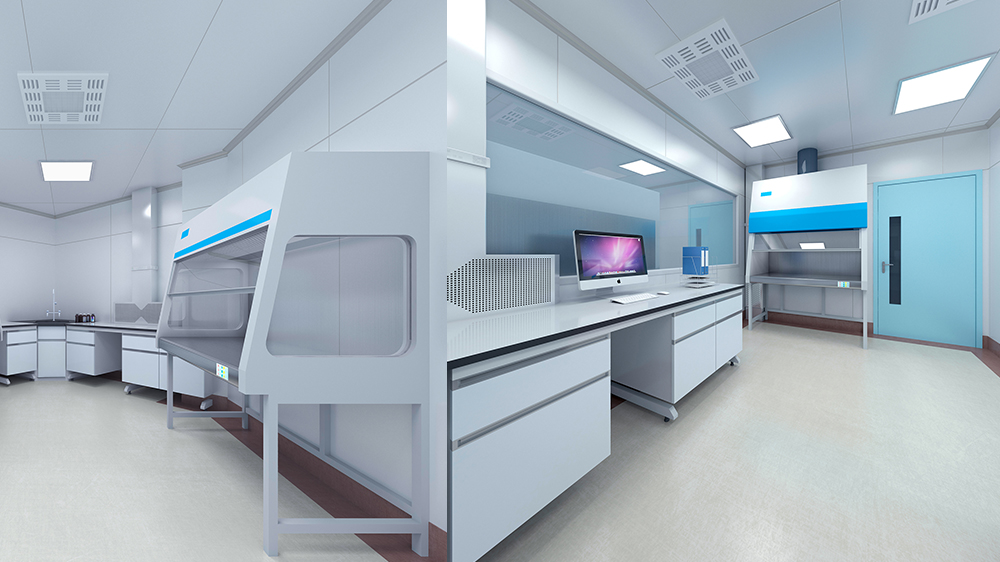
The ClabAir Clinical Laboratory Air Quality Control System adopts scientifically planned layout to meet the clean and contaminated area separation requirements specified in biosafety regulations. It features customized design for ventilation, air conditioning, air parameter monitoring, as well as intelligent control of airflow, temperature and humidity. Combined with localized purification equipment such as laboratory purification workstations for contaminated working areas, the system maintains stable preset pressure differentials and airflow paths under all operating conditions. It eliminates airflow dead zones and prevents the spread and leakage of pollutants.
Meanwhile, ClabAir enables on-line monitoring of biological aerosols in designated areas. Data from aerosol sensors and multi-parameter air sensor arrays are transmitted to the AQS-CC central control tower every second. Based on built-in algorithms, the AQS-CC regulates airflow distribution and dynamically adjusts ionic purification intensity to effectively inactivate escaped microorganisms.
The system is equipped with a central control tower, air quality monitoring array, differential pressure alarm sensors, fresh air handling units, exhaust and deodorization units, special ionic purification devices, a full set of laminar flow and flow guiding components, and duct distribution systems. It is also matched with dedicated local exhaust equipment from the ClabAir product line, including laboratory purification workstations and fume hoods.

Clinical Laboratory Design

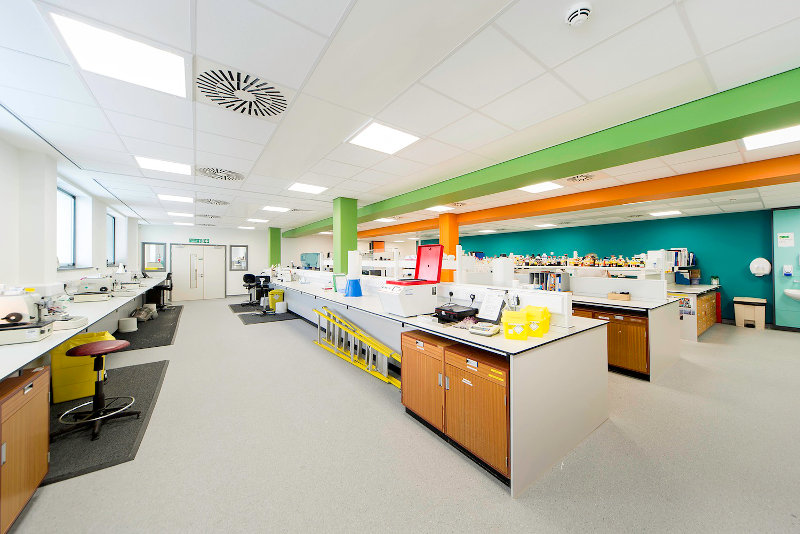
Construction Standards for Clinical Laboratories of Grade A Tertiary Hospitals Area Planning: 1.The area of clinical laboratories in Grade A Tertiary Hospitals shall be no less than 1200 square meters, and that in Grade B Secondary Hospitals no less than 800 square meters. Extra space shall be allocated if the laboratory undertakes substantial scientific research and teaching tasks. 2.HIV preliminary screening laboratory: divided into clean area, semi-contaminated area and contaminated area, with a total area of no less than 45 square meters. 3.PCR laboratory: composed of reagent preparation room, sample preparation room and amplification & analysis room. A buffer room shall be set in front of each room. The total area shall be no less than 60 square meters. 4.Microbiology laboratory: consisting of preparation room, buffer room and working area, with an area of no less than 35 square meters. 5.Blood collection area shall be an independent zone. Each blood collection window shall be no less than 1.2 meters in length and 45 to 60 centimeters in width. The number of windows shall be determined according to the average daily outpatient volume, with consideration for future development. Three-Zone and Two-Corridor Layout Design: The floor plan of the clinical laboratory shall clearly divide the clean area, semi-contaminated area and contaminated area with partitions between each zone. The clean area mainly includes changing rooms and offices; the semi-contaminated area consists of auxiliary rooms such as reagent storage and water preparation rooms; the contaminated area is primarily composed of blood collection rooms and testing laboratories. As for the two-corridor system: separate routes shall be designed for personnel and goods. Independent access points shall be provided for staff and supplies. In particular, medical waste must have a dedicated outlet and be transported to the hospital's centralized medical waste storage area via dedicated waste elevators, rather than passenger elevators. The flow of personnel and goods in the laboratory shall not conflict with that of the entire building. Supporting Design for Automated Assembly Lines in Clinical Laboratories: Compared with traditional medical laboratories, automated laboratories feature much higher levels of automation and intelligence, which also bring stricter requirements for laboratory design. Detailed planning shall be made in advance for water and electricity supply, illumination, noise control, temperature and humidity regulation, communication interfaces and other aspects.
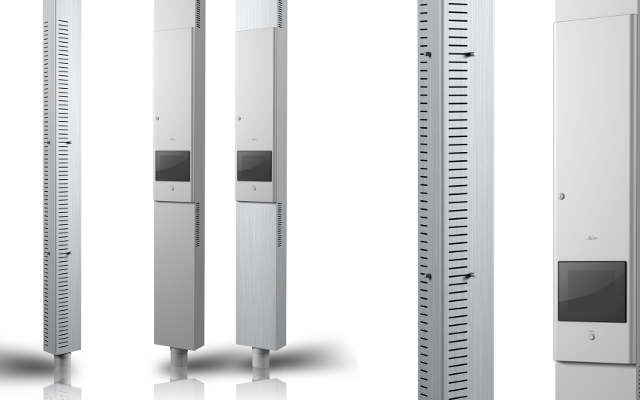
中控塔 中枢质控柱

FPAQS-CC

Central Control Column

FPAQS-CC

FPAQS-CC为落地快速柱装的集成控制中枢。内含AQC160x系列中控器,电气控制系统,报警接口模块,触控人机界面,积算功率脉冲转换器。数字化和图形化两种模式显示区域空气质量数据,根据空气质量参数,自动计算并调节净化强度。

智能控制:一键控制所有通风设备,实时显示新风、排风、室内甲醛空气质量等运行状态数据。

在线质控:检测器材经过严格计量标定认证。自动采集记录实验室空气质量数据,生成AQR空气质控报告。远程维保巡检,设备故障时,自动短信报警到指定值班手机。

F-RWA/MUX

Desktop / Floor-standing Flow Deflector

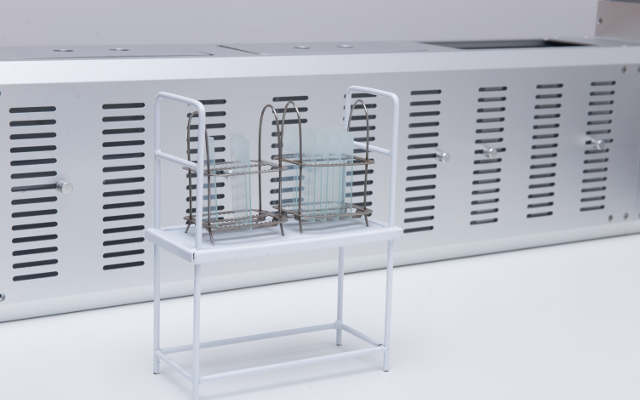
F-RWA/MUX 桌面/立式导流装置

菲兰创新科技的F-RWA/MUX,适用于包埋、切片、晾片和手工染色作业。排风量和位置可以分段调节。

立式导流装置,适用于病理科污染区和半污染区的值班排风。

一体模压成型结构,耐用50年。

ionair & Dephina

Ion Purification Module

离子净化模块

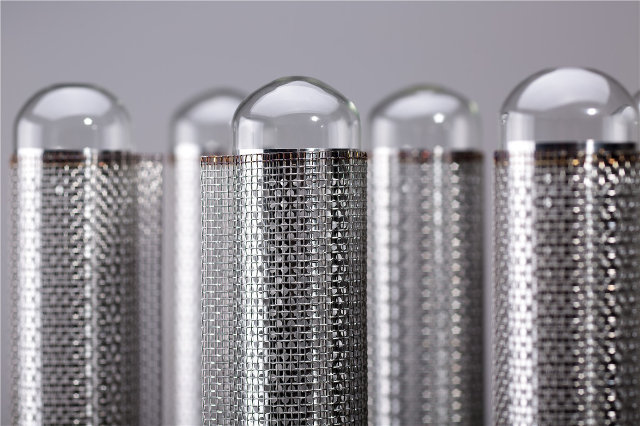
安装与送风管道,接受FPAQS-CC的指令,发射适量的可反应性粒子群,例如:氧离子O2+-,与空气中的VOCs和细菌病毒进行反应。反应的效果取决于目标分子和原子的物理性能,例如:离子能、电子亲和性、质子亲和性、偶极距、和化学反应性。

在实验室技术区域,室内空气的中的污染物,会随着各种操作而发生波动变化。因此如何随时控制净化强度,是离子净化模块能够控制室内空气达标的关键之一。


层流布气罩

FA Series

Laminar Flow Air Diffuser

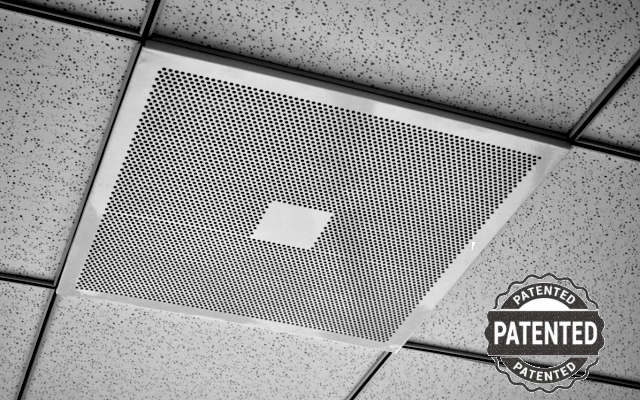
FA层流粒子布气罩

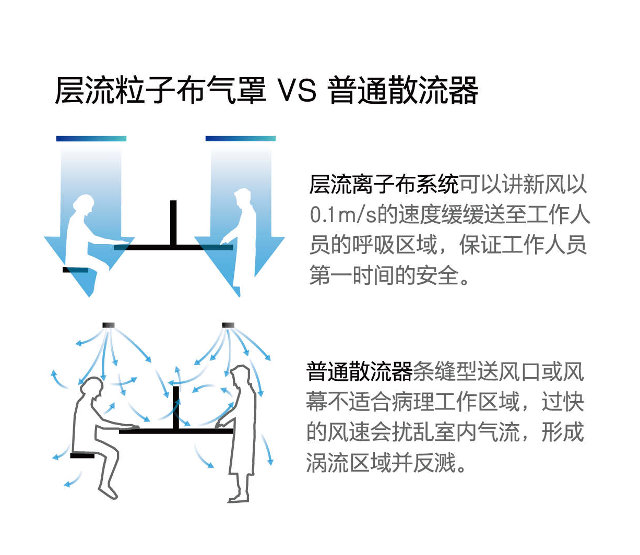
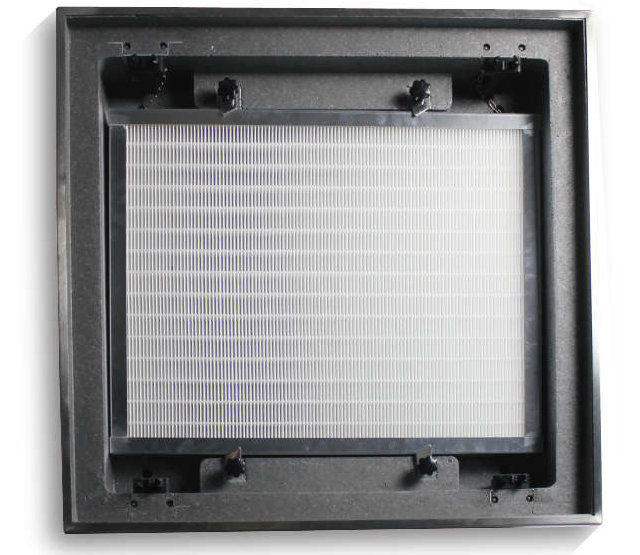
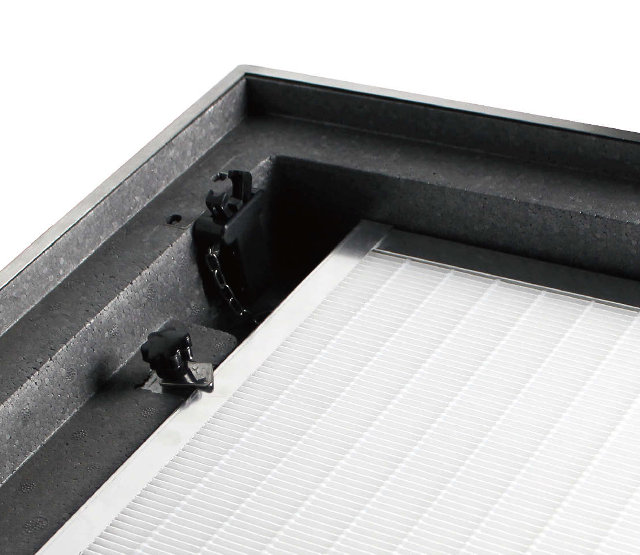
层流粒子布气罩,含消声稳流器,层流区匀速误差<5%。

最新设计的超博静压箱,适合更多吊顶安装,让科室吊顶更高阔宽敞。

新风新增F9滤网,过滤室外PM2.5,让实验室空气更安全健康。

技术参数:

规格:596*596*125mm

过滤等级:F9

罩体材质:阻燃型高密度EPS

面板材质:合金铝

新风接口直径:200mm

Turnkey Project & Supporting Equipment

To guarantee the overall performance of the PAQS system, Freshair has continuously developed, innovated and upgraded a full range of supporting equipment, including laminar flow sampling benches, purification staining benches, purification diagnostic benches, ventilated specimen cabinets and fume hoods.
The ClabAir Clinical Laboratory Air Handling System also covers the design and supply of dedicated air conditioning systems. Air conditioning load is calculated based on the following items: building envelope load, occupant load, lighting load, equipment load and fresh air load. The equipment list includes biosafety cabinets, ultra-low temperature freezers, centrifuges, freeze dryers, biochemical analyzers, pre-processing systems, automatic coagulation analyzers, protein electrophoresis instruments, chemiluminescence analyzers, automatic ELISA readers and hematology analyzers. Fresh air load accounts for the largest proportion. Accordingly, anti-contamination design for air conditioning units is a core part of the ClabAir system.
Since 2017, an increasing number of clients have adopted our turnkey total solutions that fully comply with the construction standards and requirements for clinical laboratories.

走入式通风柜

F-VEA-L
定风量走入式通风柜

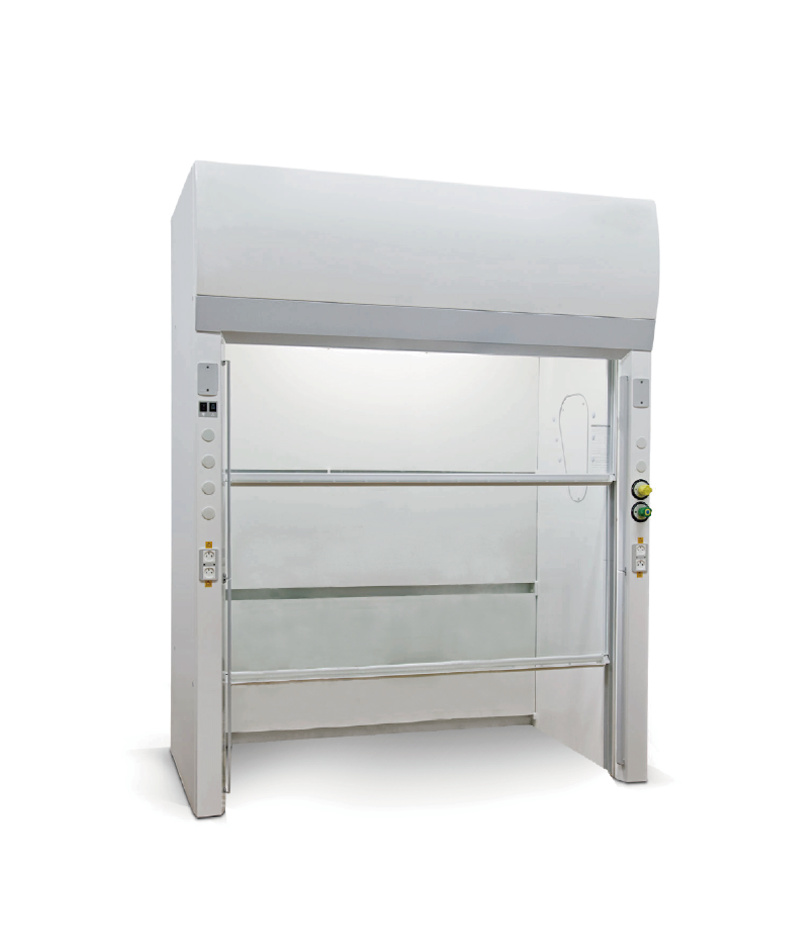
Constant Air Volume Control:Connected to FPAQS and equipped with F-V200 Venturi valve, it automatically adjusts airflow according to the operating status of the fume hood. Custome Size: Dedicated for dehydrators. Fully steel construction. Height: 2350 mm, depth: 1100 mm, width customizable from 1500 mm to 2400 mm.
定风量通风柜

F-VEA
Constant Air Volume Fume Hood

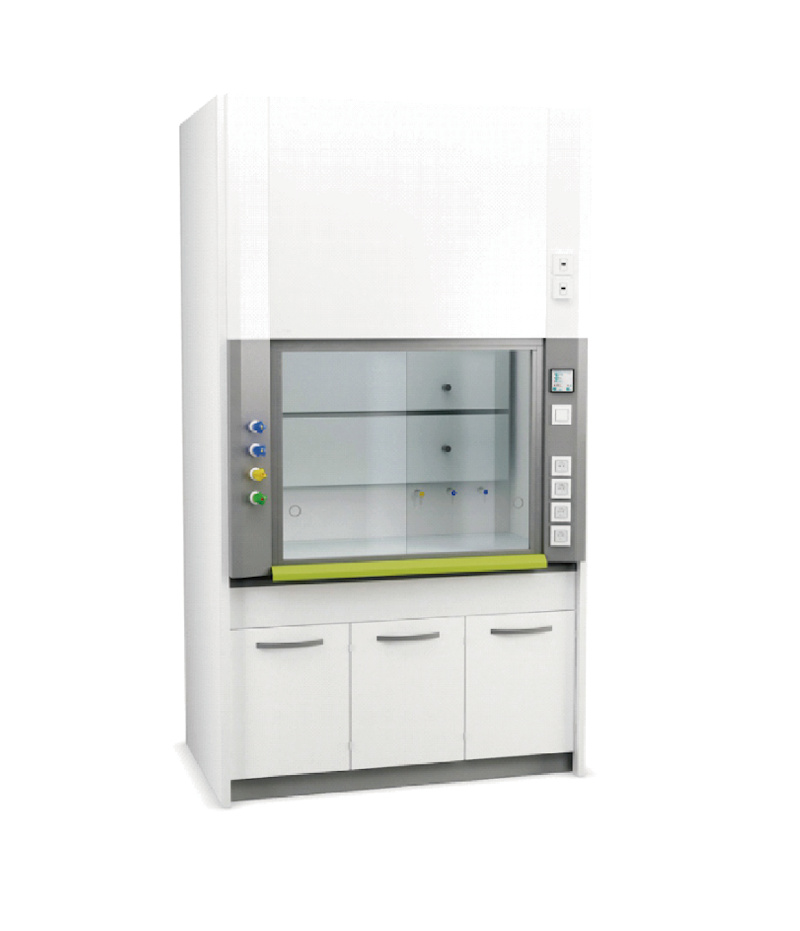
Constant Air Volume Control:Connected to FPAQS and fitted with F-V200 Venturi valve, it automatically regulates airflow based on the operation status of the fume hood. Custome Size: Fully steel structure. Height: 2350 mm, Depth: 850 mm, Width customizable from 1200 mm to 2400 mm.
TOP