
Nature Scientific Reports — Improvement and Purification of Indoor Air Quality Using Atmospheric Pressure Non-Thermal Plasma
Non-Thermal Plasma (NTP) is a promising technology for improving Indoor Air Quality (IAQ). Compared with other filtration-based purification technologies, Dielectric Barrier Discharge (DBD) plasma features fast treatment speed and no secondary pollution.
In the relevant Nature Scientific reports Reports[1],the research team developed the DBD reactor as shown in Figure 1. The experimental results provide comprehensive theoretical and practical support for the application of DBD plasma in air purification.
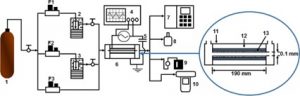
Figure 1.DBD Low-temperature Plasma Discharge Experimental Device
1-Dry cylinder,2-Water-containing bubbler,3-Formaldehyde-containing bubbler,4-Oscilloscope,5-Monitoring capacitor,6-DBD reactor,7-GC,8-Smart humidity sensor,9-Gas sampler,10-Aeroqual Series 500,11-PVC pipe housing,12-Steel plate electrode,13-Alumina dielectric material.F1、F2、F3:Flow meters
Experimental Results and Discussion
The study presents six groups of experimental results and analyses as follows:
1. Higher DBD discharge power leads to improved formaldehyde removal efficiency
Increased discharge power generates a large number of high-energy electrons and raises plasma ionization density. This creates more opportunities for collisions with formaldehyde (HCHO) molecules, thereby boosting the removal efficiency.
2. Safety of active species
The highly ionized DBD adopted in this study delivers reliable safety performance.
3. Lower air flow rate corresponds to higher removal efficiency
The residence time of air within a fixed volume is inversely proportional to the gas flow rate.
4. Mechanism of formaldehyde degradation by plasma
This paper reviews previous studies by Asilevi [11], Shimizu [29] and Storch [37]on formaldehyde degradation by plasma[16[[17]. References [16] and [17] elaborate on the inelastic collisions between ·HCO & ·OH radicals, as well as ·HCO & ·O radicals. A series of plasma chemical reactions ionize air molecules and convert formaldehyde (HCHO) into carbon dioxide (CO₂) and water vapor
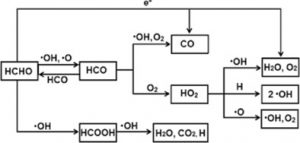
Figure 2 Process of Formaldehyde Degradation by Plasma
【5】Effects of Relative Humidity (RH)
Multiple studies [13][14][15] indicate that water vapor (H₂O) is decomposed by DBD low-temperature plasma to produce ·OH radicals, which play a vital role in bacteria purification and VOC removal in air.
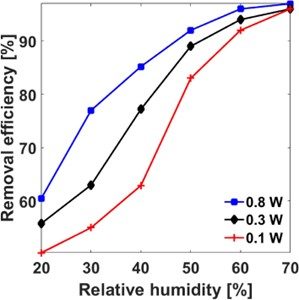
Figure3Relative Humidity (RH) affects the formaldehyde degradation efficiency of DBD plasma.
The study found that formaldehyde removal efficiency rises with increasing relative humidity. For instance, under atmospheric pressure and room temperature, when relative humidity increased from 20% to 70% at a discharge power of 0.8 W, the removal efficiency climbed from 60.5% to over 97%.
【6】Optimization of Parameter Conditions
Conclusion
Harmful volatile organic compounds (VOCs) including formaldehyde are commonly found in special environments such as hospital pathology laboratories, animal facilities, physical and chemical laboratories of research institutions, and spaces contaminated by indoor building materials.The Natur-O Ion Purification Series adopts Dielectric Barrier Discharge (DBD) Non-Thermal Plasma (NTP) technology, and is equipped with a full range of air distribution control products. These products are jointly developed by FreshAir's R&D teams in China and Germany.It is worth noting that during the sales campaign of the Natur-OF formaldehyde removal purifier on TMall ,merchants recommend using a humidifier to raise indoor relative humidity and accelerate formaldehyde removal. This is consistent with the conclusion presented in this paper that relative humidity affects formaldehyde treatment efficiency.
References
1,Asilevi, P.J., Boakye, P., Oduro-Kwarteng, S. et al. Indoor air quality improvement and purification by atmospheric pressure Non-Thermal Plasma (NTP). Sci Rep 11, 22830 (2021). https://doi.org/10.1038/s41598-021-02276-1
11,Asilevi, P. J. et al. Decomposition of formaldehyde in strong ionization non-thermal plasma at atmospheric pressure. Int. J. Environ. Sci. Technol 17, 765–776 (2020).
15,Fan, X, Wan, Y, & Zhu, T. Removal of low-concentration formaldehyde in indoor air by DC corona discharge plasma, in The international symposium on non-thermal/thermal plasma pollution control technology and sustainable energy. 1-4. (Canada: N. p., 2010).
16,Zadi, et al. Indoor air treatment of refrigerated food chambers with synergetic association between cold plasma and photocatalysis: Process performance and photocatalytic poisoning. Chem. Eng. J. 382, 122951 (2020).
17,Yuan, J. et al. Experimental study on the removal of formaldehyde by plasma-catalyst. IOP Conf. Ser. Earth Environ. Sci. 435, 012004 (2020).
29,Shimizu, K., Kuwabara, T. & Blajan, M. Study on decomposition of indoor air contaminants by pulsed atmospheric microplasma. J. Sens. 12, 14525–14536 (2012).
37,Storch, D. G. & Kushner, M. J. Destruction mechanisms for formaldehyde in atmospheric pressure low temperature plasmas. J. Appl. Phys. 73, 51–55 (1993).